You may have heard the news about Pat Robertson's latest offensive comments. This time it didn't target gays or foreigners, but the diseased. In a recent television appearance, Robertson replied to a caller asking about how he should adivise a friend who had decided to see another woman because of his wife's advanced Alzheimer's.
I grew up fundamentalist, so I think I know the answer here. Tell the friend to stop, ask forgiveness, and love on his wife until death. From birth to seventeen years old, I attended a good old King James, Bible Believing, Independent Baptist Church, three times a week, every week. That makes over 2500 sermons before I even became an adult, and most of them had something to say about sex, drugs, and/or rock and roll. Don't take me the wrong way, the people of that church showed love and care with their actions, but the message out of their mouths came clear. Adultery and Divorce are wrong.
I've never been a big fan of Robertson, but I thought he would at least get this one right. But no, he said "I know it sounds cruel, but if he's going to do something, he should divorce her and start all over again, but make sure she has custodial care and somebody looking after her." He admits that marriage is until "death" but then says that Alzheimer's is like a living death. So that makes it ok I guess.
This is so wrong, and the reason why I believe Christians (yes, I am one) need to understand the source behind their convictions. For starters, our nation is great, and I love family, but let's be clear. I believe in a man, who I also believe was a God (the God even). That this God-man lived on this earth and suffered death at the hands of his creation. Miraculously, he didn't stay dead. He returned to this earth until ascending into heaven. If you're not a Christian, that sounds foolish. If you are, it probably doesn't sound foolish enough. If you really believe that (and I do) its a pretty big deal. Bigger than a pledge or blood relationships, or all of the legalistic morass we let ourselves get bound up in.
Let's look to some reason. If said wife has "lost her mind", we might conclude that she is no longer "like the living", therefore a covenant relationship like marriage may be voided on those grounds. She is less than human, not deserving the same right to expect faithfulness from her husband as one who possesses full mental health. If that's the case, then how can you argue that a fetus in the womb possesses full life that can't be violated. Is the potential of life more valuable that the fulfillment of life embodied in its final journey to death? Does the fetus deserve any more the right to birth than a person deserves the right to maintain full dignity and humanity even unto death?
Too much self-serving logic going on here. Of what value is life? Can we argue over it's beginning at conception or birth while we sit idly by watching execution take place? How did a discussion of Alzheimer's take us to capital punishment? Shane Claiborne wrote just today a defense of Grace in the face of death. Should we dismiss the Psalms and get self-righteous over the fact that King David, guilty of murder, should have never been allowed to live long enough to write them? Should the bulk of the New Testament be rejected because the writer, Paul, would have willingly accepted the penalty for his crimes if his conversion had been true?
We need to think! Humanity, infused with the very breath of God is exceedingly deep, but we flippantly decide who is deserving and who doesn't have the privilege to the rights of that humanity. We are too ready to set our minds firm on issues of abortion, death, the right to life, and dying with dignity when these issues deserve deep and mindful consideration and soul-searching.
But unfortunately for many, it's just a whole lot easier to find out what Pat thinks about it.
Showing posts with label Jesus. Show all posts
Showing posts with label Jesus. Show all posts
Friday, September 16, 2011


Friday, June 24, 2011
Relationships- The Glue of Humanity
So what do you do in the summer?
As a teacher I hate that question because I always assume that it is seeded with contempt that I've got three months of vacation. First of all, June 15 to August 15 is not three months. Second, I don't just lay around the house all summer catching up on the soaps or lounge by the pool all day.
This week, the first full week of summer vacation I traveled with twenty-two teenagers to Southeast Roanoke. While there, we ran a day camp for children in a rather neglected community. I got to watch a sixteen year old spend her mornings working with a three-year old autistic child. I saw a fourteen year old deal with a child who came to camp every day with a different name. A rising eigth grader bonded with a third-grader who still showed the effects of an unlucky birth to a crack-addicted mother. We painted the porch of a WWII veteran because his elderly neighbor cared enough to seek out help and struggles against the odds to make a neighborhood neglected by the city look presentable again. We entered the house of a woman who had a hard time getting rid of things, and help her pack things away and clean up her house. Calming her anxiety was a bigger struggle that sorting through the accumulated stuff.
I learned last week that relationships are the glue that holds humanity together and when relationships are neglected or put on the backburner for other things-- humanity breaks apart. I went to the home of one elderly lady. When she started down the front porch steps to meet me I was afraid that she would fall. Her feet were too sore for shoes. Looking down I could see that her greatest need might be as simple as someone to trim her nails. A lawn mower sat in the lawn, but grass was growing over its deck. Her mental health matched her physical health. She didn't understand that we were offering our services for free. She insisted that her grandson would take care of it. He is a landscaper. He just cant work on her lawn as long as he has paying jobs that take the time. Her neighbor knew her two sons. Apparently they were alcoholics that caused her more harm than good. In this poor old woman, I saw a soul without another soul to care for her. Society has neglected her. No one desires to have a relationship with this lady.
The veteran that I mentioned before, he's no better off. He was so eager to share stories and talk, probably more so than getting his porch painted. It seemed that his only companion was the nurse who came to his house every day to take care of him.
We spent our week in a pocket of poverty. It wasn't as bad as it could get, but compared to my lifestyle it was bad. These pockets are easy to overlook. They're out of the way. We keep them clustered away from the paths that we cross daily. As long as we have food on our table and clothes on our back, we can lay our heads in our comfortable beds and sleep well at night without a thought for the children who aren't sure what if anything they will eat for breakfast in the morning. When we grab a to go cup of coffee and drive to our next destination it's easy to forget the poor old lady who can't get around because she can't get shoes over her untrimmed toenails.
We drive by, we walk by, we fly over, but we seldom stop. Stop to just see and hear America, the world. Outside of our immediate five senses we allow ourselves to become ignorant of the reality of life. We build an excellent buffer with our nicely trimmed lawns, personal automobiles, membership only swimming pools, and comfortable if not pretentious churches. A buffer that we mistake for reality to mask and hide the ugly realities that we'd rather not think about.
It's not that we should all be considering "selling everything and giving it to the poor", at least I'm not so sure that Jesus meant that command for everyone. It's easy to think that our job is to go in and fix the problems. Jesus didn't do it that way. Jesus entered our humanity and lived it with us, and continues to live it with us. He didn't die to end human suffering, he died to enter suffering with us so that we may overcome in time. He performed many miracles, but he didn't end poverty, hunger, or oppression. He endured poverty, hunger, and oppression. By doing so he intertwined the fate of humanity with the fate of the divine. He created relationship with the world.
That is true relationship. Enduring the hardship and walking alongside those in need. Being willing to suffer with another and not just thinking that because I wear better clothes, have my own car, and extra cash on top of it that I can just use my resources to rescue others from their difficulties. Whether it is poverty of the mind, body, economy, or soul, none of us possess the ability to rescue another but through our willingness to live life together in genuine relationships with others. Relationships that intertwine our fate with the fate of others.
Relationship is the glue that holds humanity together. I would bet that where we find humanity in ruins, not just places where people are poor but places that seem empty of hope, we also find that the root of that ruin lays in broken and unhealthy relationships.
That's what I've done and learned so far this summer. I've got a few adventures still ahead. I like seeing the counter numbers and site traffic climb when I post frequently, but lately I've gotten comfortable knowing that when I only get around to posting only every few weeks or once a month I'm only going to get a few readers. But I've got a lot to do if I really believe what I just wrote about relationships. I'll try to post a few more times this summer if you're interested. I've got a few family trips, a week at a youth camp, and a big U2 concert to attend this summer.
So what do you do in the summer?
As a teacher I hate that question because I always assume that it is seeded with contempt that I've got three months of vacation. First of all, June 15 to August 15 is not three months. Second, I don't just lay around the house all summer catching up on the soaps or lounge by the pool all day.
This week, the first full week of summer vacation I traveled with twenty-two teenagers to Southeast Roanoke. While there, we ran a day camp for children in a rather neglected community. I got to watch a sixteen year old spend her mornings working with a three-year old autistic child. I saw a fourteen year old deal with a child who came to camp every day with a different name. A rising eigth grader bonded with a third-grader who still showed the effects of an unlucky birth to a crack-addicted mother. We painted the porch of a WWII veteran because his elderly neighbor cared enough to seek out help and struggles against the odds to make a neighborhood neglected by the city look presentable again. We entered the house of a woman who had a hard time getting rid of things, and help her pack things away and clean up her house. Calming her anxiety was a bigger struggle that sorting through the accumulated stuff.
I learned last week that relationships are the glue that holds humanity together and when relationships are neglected or put on the backburner for other things-- humanity breaks apart. I went to the home of one elderly lady. When she started down the front porch steps to meet me I was afraid that she would fall. Her feet were too sore for shoes. Looking down I could see that her greatest need might be as simple as someone to trim her nails. A lawn mower sat in the lawn, but grass was growing over its deck. Her mental health matched her physical health. She didn't understand that we were offering our services for free. She insisted that her grandson would take care of it. He is a landscaper. He just cant work on her lawn as long as he has paying jobs that take the time. Her neighbor knew her two sons. Apparently they were alcoholics that caused her more harm than good. In this poor old woman, I saw a soul without another soul to care for her. Society has neglected her. No one desires to have a relationship with this lady.
The veteran that I mentioned before, he's no better off. He was so eager to share stories and talk, probably more so than getting his porch painted. It seemed that his only companion was the nurse who came to his house every day to take care of him.
We spent our week in a pocket of poverty. It wasn't as bad as it could get, but compared to my lifestyle it was bad. These pockets are easy to overlook. They're out of the way. We keep them clustered away from the paths that we cross daily. As long as we have food on our table and clothes on our back, we can lay our heads in our comfortable beds and sleep well at night without a thought for the children who aren't sure what if anything they will eat for breakfast in the morning. When we grab a to go cup of coffee and drive to our next destination it's easy to forget the poor old lady who can't get around because she can't get shoes over her untrimmed toenails.
We drive by, we walk by, we fly over, but we seldom stop. Stop to just see and hear America, the world. Outside of our immediate five senses we allow ourselves to become ignorant of the reality of life. We build an excellent buffer with our nicely trimmed lawns, personal automobiles, membership only swimming pools, and comfortable if not pretentious churches. A buffer that we mistake for reality to mask and hide the ugly realities that we'd rather not think about.
It's not that we should all be considering "selling everything and giving it to the poor", at least I'm not so sure that Jesus meant that command for everyone. It's easy to think that our job is to go in and fix the problems. Jesus didn't do it that way. Jesus entered our humanity and lived it with us, and continues to live it with us. He didn't die to end human suffering, he died to enter suffering with us so that we may overcome in time. He performed many miracles, but he didn't end poverty, hunger, or oppression. He endured poverty, hunger, and oppression. By doing so he intertwined the fate of humanity with the fate of the divine. He created relationship with the world.
That is true relationship. Enduring the hardship and walking alongside those in need. Being willing to suffer with another and not just thinking that because I wear better clothes, have my own car, and extra cash on top of it that I can just use my resources to rescue others from their difficulties. Whether it is poverty of the mind, body, economy, or soul, none of us possess the ability to rescue another but through our willingness to live life together in genuine relationships with others. Relationships that intertwine our fate with the fate of others.
Relationship is the glue that holds humanity together. I would bet that where we find humanity in ruins, not just places where people are poor but places that seem empty of hope, we also find that the root of that ruin lays in broken and unhealthy relationships.
That's what I've done and learned so far this summer. I've got a few adventures still ahead. I like seeing the counter numbers and site traffic climb when I post frequently, but lately I've gotten comfortable knowing that when I only get around to posting only every few weeks or once a month I'm only going to get a few readers. But I've got a lot to do if I really believe what I just wrote about relationships. I'll try to post a few more times this summer if you're interested. I've got a few family trips, a week at a youth camp, and a big U2 concert to attend this summer.
So what do you do in the summer?
Monday, April 25, 2011
The Day After
Easter is over, unless you are among the select few home from work because "Easter Monday" still means something. The kids are coming down from their sugar highs and we gear up for grilling out and sporting the American flags as the Memorial Day/Fourth of July holiday season is upon us. We are winding down from our school years and preparing for family vacations. Beaches and pools beckon us. And likely, church pews will empty. Our charity and consideration for others so present during the winter season of Thanksgiving and Christmas wanes and our minds turn toward escape and relaxation.
 I'm not sure if this is a fair description of what happens now, but for myself it becomes very easy to slide into this rut. But today I think about what the day after resurrection means. For Jesus' disciples, Maundy Thursday through Saturday must have been so confusing and sorrowful. Easter Sunday would be incredulous and jubilant, perhaps so much so that they were stopped in their tracks. But what about the day after. The realization that the man in whom they had cast their hope, who had apparently died and left them abandoned and alone in their folly, had indeed defeated death and returned from the dead only to ascend before their eyes into heaven.
Do we really believe that? Because the idea is pretty crazy. Crazy enough that starting with the day after, Jesus followers had to honestly start asking themselves "what now!?" Really, do you just drop your jaw and say "wow, Jesus just died and came back to life and I'm watching him ascend into heaven" and then just go back to whatever you were doing, or just start moving on toward the next "normal" holiday or season in the year. The disciples knew this required action and they followed Jesus instructions to "go and make disciples." They built the church and established the legacy that would sustain the Christian faith for millenia. That's what they did the day after Easter. (ok, I'm using the word day in a metaphorical sense, but the question remains)
What are we doing the day after Easter?
Do we really believe that? Because the idea is pretty crazy. Crazy enough that starting with the day after, Jesus followers had to honestly start asking themselves "what now!?" Really, do you just drop your jaw and say "wow, Jesus just died and came back to life and I'm watching him ascend into heaven" and then just go back to whatever you were doing, or just start moving on toward the next "normal" holiday or season in the year. The disciples knew this required action and they followed Jesus instructions to "go and make disciples." They built the church and established the legacy that would sustain the Christian faith for millenia. That's what they did the day after Easter. (ok, I'm using the word day in a metaphorical sense, but the question remains)
What are we doing the day after Easter?
Sunday, April 17, 2011
A Funny Thing Happened on the Way to the Cross
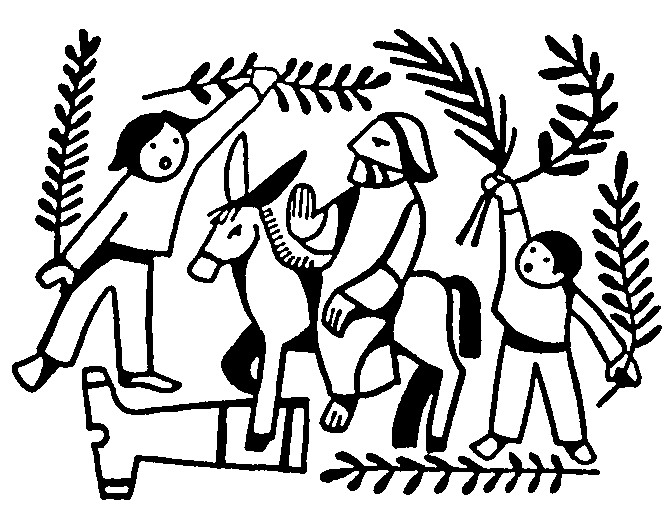
Our pastor chose to mark the alternate designation of this day as "Passion Sunday," rather than jumping from the celebration of Palm Sunday to the celebration of Easter. Without crucifixion there would be no resurrection. For this Sunday, our scripture was a lengthy passage from Matthew. I've read it many times, Jesus before Pilate leading to his crucifixion. I guess that sometimes familiarity is a bad thing. I had to read the scripture for the congregation and right in the middle around verse 26, I came to a realization as if I were reading this for the first time. Reading this passage about Jesus, being led as a lamb to the slaughter-- at least sacrificial animals were treated with some level of dignity and respect-- reading this passage I teared up and had to stop. In that moment I clearly realized that I wasn't reading just a story on the page, but the story of a world gone mad, a world ready to snuff the very Son of God. And even worse, I am a part of that world. Not only do I live in it daily, I contribute to making it what it is. This is the lesson of Holy Week, and the reason that Easter means so much.
11 Meanwhile Jesus stood before the governor, and the governor asked him, “Are you the king of the Jews?”
“You have said so,” Jesus replied.
12 When he was accused by the chief priests and the elders, he gave no answer. 13 Then Pilate asked him, “Don’t you hear the testimony they are bringing against you?” 14 But Jesus made no reply, not even to a single charge—to the great amazement of the governor.
15 Now it was the governor’s custom at the festival to release a prisoner chosen by the crowd. 16 At that time they had a well-known prisoner whose name was Jesus Barabbas. 17 So when the crowd had gathered, Pilate asked them, “Which one do you want me to release to you: Jesus Barabbas, or Jesus who is called the Messiah?” 18 For he knew it was out of self-interest that they had handed Jesus over to him.
19 While Pilate was sitting on the judge’s seat, his wife sent him this message: “Don’t have anything to do with that innocent man, for I have suffered a great deal today in a dream because of him.”
20 But the chief priests and the elders persuaded the crowd to ask for Barabbas and to have Jesus executed.
21 “Which of the two do you want me to release to you?” asked the governor.
“Barabbas,” they answered.
22 “What shall I do, then, with Jesus who is called the Messiah?” Pilate asked.
They all answered, “Crucify him!”
23 “Why? What crime has he committed?” asked Pilate.
But they shouted all the louder, “Crucify him!”
24 When Pilate saw that he was getting nowhere, but that instead an uproar was starting, he took water and washed his hands in front of the crowd. “I am innocent of this man’s blood,” he said. “It is your responsibility!”
25 All the people answered, “His blood is on us and on our children!”
26 Then he released Barabbas to them. But he had Jesus flogged, and handed him over to be crucified. 27 Then the governor’s soldiers took Jesus into the Praetorium and gathered the whole company of soldiers around him. 28 They stripped him and put a scarlet robe on him, 29 and then twisted together a crown of thorns and set it on his head. They put a staff in his right hand. Then they knelt in front of him and mocked him. “Hail, king of the Jews!” they said. 30 They spit on him, and took the staff and struck him on the head again and again. 31 After they had mocked him, they took off the robe and put his own clothes on him. Then they led him away to crucify him. 32 As they were going out, they met a man from Cyrene, named Simon, and they forced him to carry the cross. 33 They came to a place called Golgotha (which means “the place of the skull”). 34 There they offered Jesus wine to drink, mixed with gall; but after tasting it, he refused to drink it. 35 When they had crucified him, they divided up his clothes by casting lots. 36 And sitting down, they kept watch over him there. 37 Above his head they placed the written charge against him: THIS IS JESUS, THE KING OF THE JEWS.
38 Two rebels were crucified with him, one on his right and one on his left. 39 Those who passed by hurled insults at him, shaking their heads 40 and saying, “You who are going to destroy the temple and build it in three days, save yourself! Come down from the cross, if you are the Son of God!” (Matthew 27:11-54, New International Version, ©2011)
Monday, February 28, 2011
A Manifesto for Restoration
"The Good News About the End of Christian America" reads the text across the front cover of Gabe Lyons' The Next Christians . Many would argue that "Christian America" has always been a myth, but myth or reality, that mindset pervaded the evangelical Christian community throughout the second half of the twentieth century.
For this reason I found myself skeptical reading the first two chapters. Lyons' described recent changes that would indicate that what once was an idyllic Christian environment has come undone in recent years. I was wrong about Lyons' intention. Rather than bemoaning the demise of "Christian America" and describing the twenty-first century method of fighting it, Lyons' embraces the challenges of a new century and the opportunities to reframe the Christian narrative in a restorative framework.
Lyons describes several subgroups of Christians, grouping them all into two main categories: separatists and cultural. The former reacts to the broader world by withdrawing and criticizing. The latter integrates into the world at the expense of the gospel. The Next Christians represent a third way forward. This new way forward is neither progressive movement leaving the old behind nor a reactive movement rejecting the new to hold on to the old.


The next Christians practice restoration by fully living out the call of Paul to "be in and not of" this world. They do this by being provoked, not offended; creative, not critical; called, not employed; grounded, not distracted; in community, not alone; countercultural, not relevant. This third group of emerging Christians are neither separatist or culutural, reclaiming the full gospel beginning with creation and ending with restoration.
Within this clear and easy to follow framework, Lyons' fills out his description of The next Christian with moving stories of people living out this type of faith. Some are familiar like the story of "To Write Love on Her Arms" and the simple Christianity of Shane Claiborne. Others are surprising like the story of Kevin Kelly of Wired magazine. Still others are personal acquaintances with first names only. These stories turn an interesting but lifeless structure into an engaging and inspiring work.
The Next Christians encourages and equips the reader to begin a journey of engaging the contemporary world in a Christ-like restorative fashion.
Disclaimer: this book was received as a complimentary copy for review by the publisher.
. Many would argue that "Christian America" has always been a myth, but myth or reality, that mindset pervaded the evangelical Christian community throughout the second half of the twentieth century.For this reason I found myself skeptical reading the first two chapters. Lyons' described recent changes that would indicate that what once was an idyllic Christian environment has come undone in recent years. I was wrong about Lyons' intention. Rather than bemoaning the demise of "Christian America" and describing the twenty-first century method of fighting it, Lyons' embraces the challenges of a new century and the opportunities to reframe the Christian narrative in a restorative framework.
Lyons describes several subgroups of Christians, grouping them all into two main categories: separatists and cultural. The former reacts to the broader world by withdrawing and criticizing. The latter integrates into the world at the expense of the gospel. The Next Christians represent a third way forward. This new way forward is neither progressive movement leaving the old behind nor a reactive movement rejecting the new to hold on to the old.
The next Christians practice restoration by fully living out the call of Paul to "be in and not of" this world. They do this by being provoked, not offended; creative, not critical; called, not employed; grounded, not distracted; in community, not alone; countercultural, not relevant. This third group of emerging Christians are neither separatist or culutural, reclaiming the full gospel beginning with creation and ending with restoration.
Within this clear and easy to follow framework, Lyons' fills out his description of The next Christian with moving stories of people living out this type of faith. Some are familiar like the story of "To Write Love on Her Arms" and the simple Christianity of Shane Claiborne. Others are surprising like the story of Kevin Kelly of Wired magazine. Still others are personal acquaintances with first names only. These stories turn an interesting but lifeless structure into an engaging and inspiring work.
The Next Christians
encourages and equips the reader to begin a journey of engaging the contemporary world in a Christ-like restorative fashion.Disclaimer: this book was received as a complimentary copy for review by the publisher.
Saturday, February 26, 2011
A Sunday Prayer for History
Dear God,
In a world of smoke and mirrors and shifting sand, we thank you for being the Rock on which we stand.* The passing of time brings loss and change, enough to shake the most steady soul, but you are ever with us. When we fail to cope and berate each other give us peace within our hearts. Remind us when we provoke our children, lose patience with our spouses, and complain about our work that we are a people of blessing. Keep us mindful of your promises to us that our hearts may grow thankful and not bitter.
We continue to fret over money. Paying three dollars a gallon seems unfair, and we hate to be burdened this way. As we deal with economy and make hard decisions we pray that you would show us the way of simplicity. In our thanks for food and drink, family and friends, community and health may we learn that is enough.
We honestly pray for our leaders. They have such tough decisions to make. May our voices inform them and not deflate them. Give them wisdom to lead. We pray as well God that when political answers are not the end of our problems that you would give us the wisdom to lead. We are the body of Christ on earth, may your Christians practice the discipline of “Thy Kingdom Come.”
Thank you God for being our Rock, for today we stand at the end of history and the beginning of future and we don’t know what it may bring. We give thanks for the people of North Africa and the Middle East that they have found a voice and the world can now hear what they call for. But we pray for peace to come, along with an end to oppression and tyranny. May the people of Africa and the Middle East gain the freedom they desire that we have taken for granted. As troubling as the affairs of the world may be, and as uncertain as they leave our future—from political changes in Africa to growing populations and economies in Asia may we remember to rest our hope in the future on you, that we may know that all things will work out for good.
We pray for the earthquake victims of New Zealand, and those coping with the aftermath of flood in Australia; and as we consider the world, we lift also the needs of our friends up to you God. We know of many who have received word in the last weeks of serious health concerns for themselves or for family and we pray that as their worlds change in a way that will render them forever different that you would be their strength.
And we pray for your Church dear God, and our little part in it. May we be the agents to drive change for your Glory instead of the reactors that infuse anxiety into the world. We can do this through your will, and for this reason we pray the prayer you taught us through Jesus, our Saviour: Our Father, who art in heaven, hallowed be thy name. Thy kingdom come, thy will be done, on earth as it is in heaven. Give us this day our daily bread and forgive us of our trespasses as we forgive those who trespass against us. And lead us not into temptation, but deliver us from evil. For thine is the kingdom, the power, and the glory, forever, Amen.
*credit to Jerry Varner for this line, a youth minister and friend from Richmond.
In a world of smoke and mirrors and shifting sand, we thank you for being the Rock on which we stand.* The passing of time brings loss and change, enough to shake the most steady soul, but you are ever with us. When we fail to cope and berate each other give us peace within our hearts. Remind us when we provoke our children, lose patience with our spouses, and complain about our work that we are a people of blessing. Keep us mindful of your promises to us that our hearts may grow thankful and not bitter.
We continue to fret over money. Paying three dollars a gallon seems unfair, and we hate to be burdened this way. As we deal with economy and make hard decisions we pray that you would show us the way of simplicity. In our thanks for food and drink, family and friends, community and health may we learn that is enough.
We honestly pray for our leaders. They have such tough decisions to make. May our voices inform them and not deflate them. Give them wisdom to lead. We pray as well God that when political answers are not the end of our problems that you would give us the wisdom to lead. We are the body of Christ on earth, may your Christians practice the discipline of “Thy Kingdom Come.”
Thank you God for being our Rock, for today we stand at the end of history and the beginning of future and we don’t know what it may bring. We give thanks for the people of North Africa and the Middle East that they have found a voice and the world can now hear what they call for. But we pray for peace to come, along with an end to oppression and tyranny. May the people of Africa and the Middle East gain the freedom they desire that we have taken for granted. As troubling as the affairs of the world may be, and as uncertain as they leave our future—from political changes in Africa to growing populations and economies in Asia may we remember to rest our hope in the future on you, that we may know that all things will work out for good.
We pray for the earthquake victims of New Zealand, and those coping with the aftermath of flood in Australia; and as we consider the world, we lift also the needs of our friends up to you God. We know of many who have received word in the last weeks of serious health concerns for themselves or for family and we pray that as their worlds change in a way that will render them forever different that you would be their strength.
And we pray for your Church dear God, and our little part in it. May we be the agents to drive change for your Glory instead of the reactors that infuse anxiety into the world. We can do this through your will, and for this reason we pray the prayer you taught us through Jesus, our Saviour: Our Father, who art in heaven, hallowed be thy name. Thy kingdom come, thy will be done, on earth as it is in heaven. Give us this day our daily bread and forgive us of our trespasses as we forgive those who trespass against us. And lead us not into temptation, but deliver us from evil. For thine is the kingdom, the power, and the glory, forever, Amen.
*credit to Jerry Varner for this line, a youth minister and friend from Richmond.
Monday, February 21, 2011
Embodiment as a Spiritual Discipline
I remember the "good old days" of sitting in the "gifted classrooms" at the county administration building in middle school programming the Apple II to make my name flash on the screen. Flash forward six years, and I'm sitting in a lab of computers ten times as big trying to get the command right after the DOS prompt to find WordPerfect so that I could complete my first word processed paper in college. Shortly after graduating I was using the internet and e-mail, and today I am resisting the urge to upgrade so that I can do so on a device that will fit into my pocket.
I'm certainly not at the head of the curve by any means, but like many (would it be presumptive to say most) I am certainly experiencing the ever increasing pull of connectedness offered by modern technology. I am in the middle of reading a book called "The Next Christians" by Gabe Lyons. I'll write a review of the book later, but chapter 8 is titled Grounded, not Distracted. I encountered a new concept in this chapter that would serve all of us well in the changing world of the 21st century.Lyons describes the concept of being "embodied, not divided" by sharing a story about Kevin Kelley, a senior writer for Wired Magazine. To paraphrase, Kelly shares that God chose to be embodied in Jesus relating to his "creations" by being present with them. Perhaps this would be another way of saying incarnational, but 1)does anyone really use that word, and 2)the idea of embodiment fits so much more nicely with the idea of the true church being the body of Christ on earth.
The basic premise of the idea of Embodiment is being truly present for others. I notice this problem most acutely when I find myself at the counter of a store and the attendant takes a phone call while providing service to me. I once had a parent take a phone call in the middle of a parent-teacher conference. (I am a teacher if you didn't know) Most of American adult culture bemoans the teenage addiction to devices, but the over-30 crowd is quickly surpassing our youth in their attachment to technology driven connection.
Abstinence may be the answer for some, but the basic rules of embodiment as spelled out by Kelly and related in Lyons' book sounds like a great plan for beginning to notice our surroundings.
 Priority One: Face-to-Face. If you are able to be physically in front of another person, they should have your full attention.
Priority Two: Voice-to-Voice. Without the visual "accountability" of physical presence it becomes increasingly important to refrain from engaging in other distracting behaviors such as watching the television, viewing your computer screen, etc. Again, full attention to the person you are engaging with.
Priority Three: Screen-to-Screen. Even here, we should be mindful that communication is a vital part of relationship. We should keep this communication as brief as possible and recognize that there are limits to what can be communicated effectively this way. And as always, the person with whom we are communicating deserves our full attention.
I doubt that Embodiment will achieve the status of traditional disciplines such as prayer and fasting (indeed, perhaps it shouldn't) but as Christians in the 21st century, striving to be "in and not of" this world, the discipline appears to be a Christ-like practice. The discipline of embodiment should keep us aware of the needs that God places in our lives enabling us to better serve as the body of Christ on earth.
Subscribe to:
Posts (Atom)